
Roll Call vs Role Call can confuse almost anyone because the two expressions sound the same, yet their meanings are completely different in everyday English writing and speech. You have probably seen someone write role call instead of roll call in a comments section, and at first it looks correct. From my own experience helping learners improve their English, I have noticed that this common error happens because spellcheck often stays quiet and the correct choice depends on context rather than sound. These homophones require attention to spelling, grammar, usage, meaning, communication, written communication, spoken communication, oral communication, communication skills, language skills, and careful word choice. That is why students, teachers, participants, leaders, facilitators, native speakers, English learners, professionals, HR managers, employees, and many writers still experience confusion.
In schools, a roll call is a formal process used for attendance, taking attendance, attendance tracking, an attendance sheet, an attendance check, or an attendance record. During a session, meeting, or classroom activity, a register, list, or lists of names is read by calling out names so people can be marked present or absent. The process includes verification, confirmation, identification, accountability, checking, checking lists, classroom management, organizational procedures, and session management to keep everything in good order. A role, however, refers to a part or character, making the distinction easy once you understand the semantics, pronunciation, phonetics, speech, vocabulary, clarity, clarity in writing, clarity in speech, proper communication, proper pronunciation, and proper identification.
Over time, I found that daily use, practicing, and reviewing real examples helped me remember the subtle differences between these terms. Simple memory tricks, useful tips, and following standards, instructions, and consistent writing habits improved my accuracy, precision, professionalism, and confidence. They also helped me recognize mistakes, avoid misuse or incorrect use, communicate every message properly, and always choose the correct term when tracking attendance or editing documents. With enough practice and careful use, your writing becomes more clear, accurate, and professional, while reducing miscommunications and other embarrassing situations.
Understanding the Basics
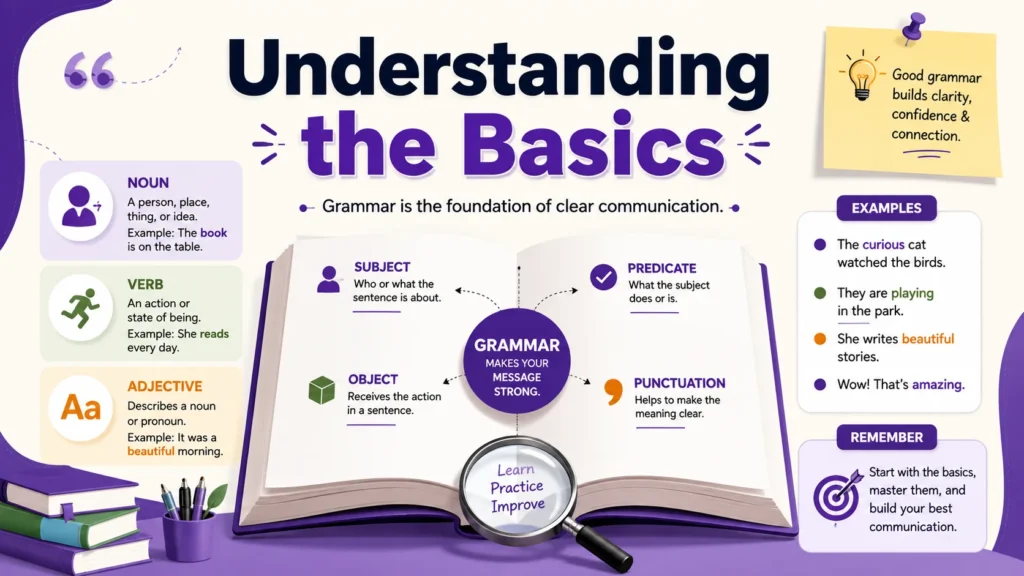
Before diving into history or examples, let’s clarify the core difference.
Roll call refers to the process of calling out names to check attendance or verify presence. It’s official, formal, and often used in institutions like schools, the military, or legislative bodies.
Role call, on the other hand, is almost always a misused version of roll call. People sometimes say it when they mean roll call, simply because the words sound similar. Technically, role means a function, duty, or character someone plays, which is entirely different from the act of taking attendance.
Using the wrong term can lead to misunderstandings in professional emails, legislative documentation, or academic records. Imagine a teacher announcing, “We’re starting a roll call!” instead of roll call—the message might confuse students unfamiliar with the subtle difference.
Etymology and Historical Origins

Understanding the roots of these words helps explain why they are often confused.
Roll Call
- The word roll comes from Latin rotulus, meaning a small roll or scroll of paper. In early English, a roll referred to a list or record.
- Roll call first appeared in military contexts, where officers would read a list of soldiers to check who was present.
- Over time, the practice extended to schools, legislative bodies, and other formal organizations.
Role Call
- The word role comes from the French rôle, meaning a part played by an actor or a function someone fulfills.
- People mistakenly use role call because it sounds correct when referring to people being “called.”
- The misunderstanding grew as spoken English often blurs the distinction between homophones like roll and role.
Fact: Historical documents from the 18th century already show confusion between these terms in informal writing. However, official records always use roll call to maintain accuracy.
Common Causes of Confusion
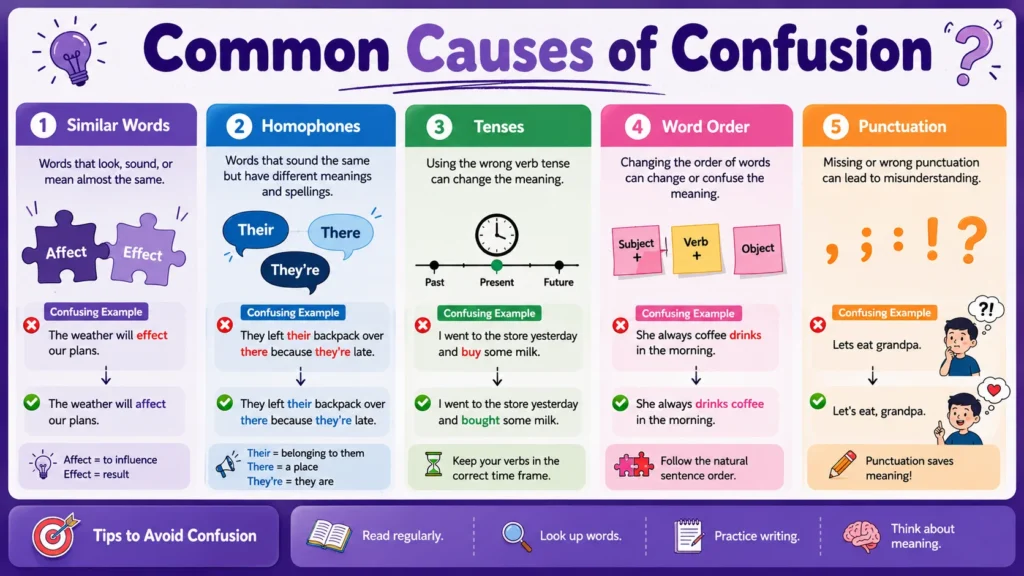
Several factors contribute to the widespread confusion between roll call and role call:
- Phonetic similarity: The words are pronounced almost the same.
- Semantic overlap: Calling someone’s name can feel like assigning them a role, leading people to intuitively choose “role.”
- Media influence: Movies, blogs, and social media often perpetuate incorrect usage.
Examples of misuse in media:
- Social media captions: “Time for role call! Who’s ready?”
- Blogs: “Don’t forget to do a role call for your team.”
- News reports: Sometimes editors accidentally write “role call” instead of roll call, especially in casual reporting.
Roll Call: Meaning, Function, and Real-World Usage
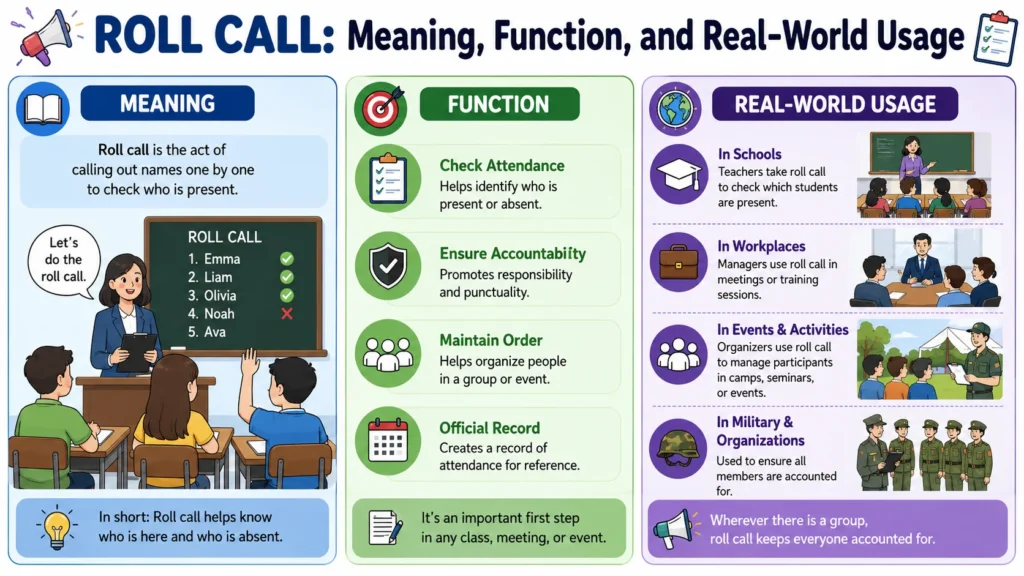
Definition and Purpose
Roll call is the systematic calling of names to verify presence or participation. Its primary purpose is accountability. Whether in a classroom, military setting, or parliamentary session, roll call ensures everyone is accounted for.
Historical Context
- Military: Armies have conducted roll calls for centuries to track soldiers’ attendance during drills or before battles.
- Legislature: Parliamentary bodies use roll call votes to document how each member votes officially.
- Education: Teachers rely on roll calls to maintain accurate attendance records.
Modern Applications
- Virtual classrooms now conduct roll calls through digital platforms.
- Event organizers use digital roll call apps to verify attendee registration.
- Corporations may conduct roll calls in meetings to track participants, especially in large remote teams.
Case Study: Roll Call in a Legislative Setting
During the U.S. House of Representatives voting on the Infrastructure Investment and Jobs Act of 2021, a roll call vote was conducted.
- Each member’s name was called, and their vote recorded.
- The official roll call ensured transparency, accountability, and accuracy.
- Without it, disputes over vote counts could have arisen, demonstrating the importance of this practice.
Role Call: Why It’s Almost Always Wrong
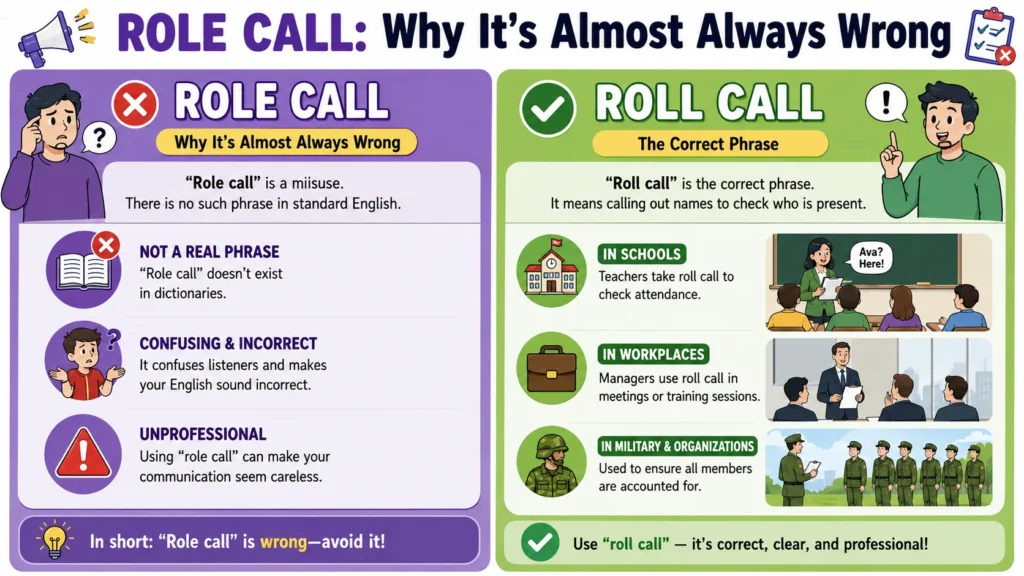
Common Misunderstandings
- Many assume role call is acceptable when listing participants or attendees.
- Some educators or team leaders say role call colloquially, even though “roll call” is correct.
Analysis of Incorrect Usage
- Using role calls in official documents is incorrect and can be confusing.
- It often appears in informal writing, like social media or casual emails.
When “Role Call” Could Make Sense
Rarely, “role call” could be technically correct if you’re calling out roles or functions, such as in theater or project teams:
- “Let’s do a roll call of everyone responsible for marketing.”
- Here, the focus is on the function or responsibility of each person, not attendance.
Roll Call vs Roll Call: Side-by-Side Comparison
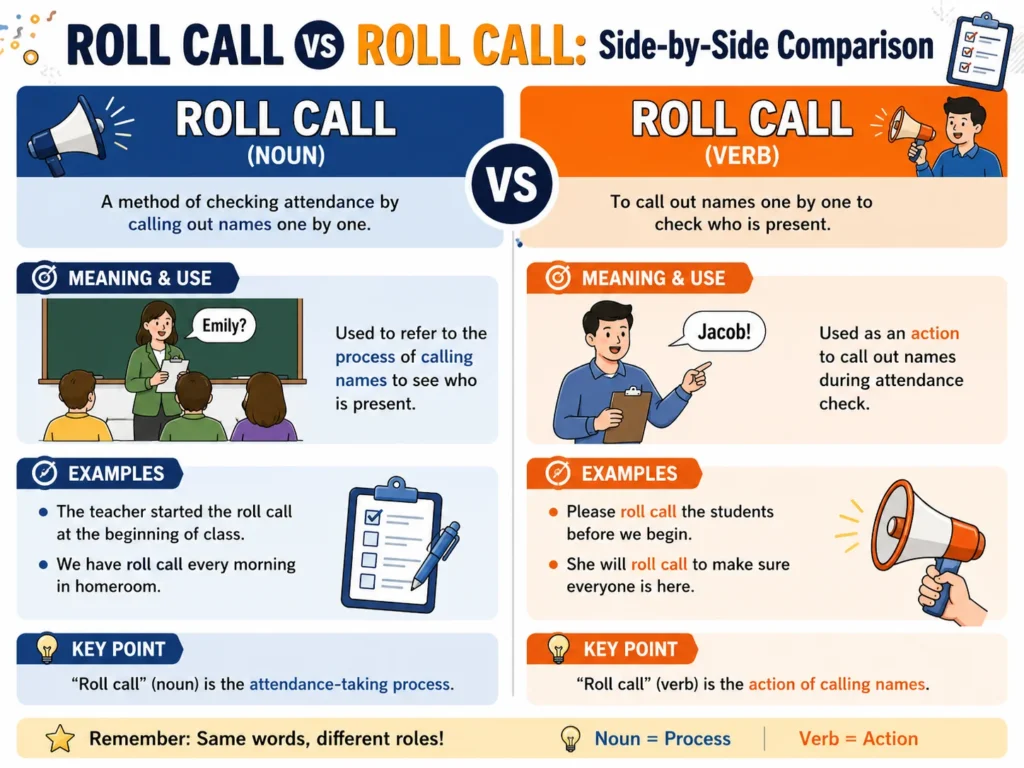
| Feature | Roll Call | Role Call |
| Definition | Calling names to check attendance | Calling out functions/roles (rare) |
| Common Contexts | Schools, military, legislative voting | Theater, projects (informal) |
| Correct Usage? | ✅ Yes | ❌ Usually incorrect |
| Origin | Latin rotulus, meaning scroll/list | French rôle, meaning function/part |
| Modern Examples | Classroom apps, government meetings | Project meetings (informal) |
This table provides a quick reference for readers to always know which term to use.
Practical Tips to Remember the Difference
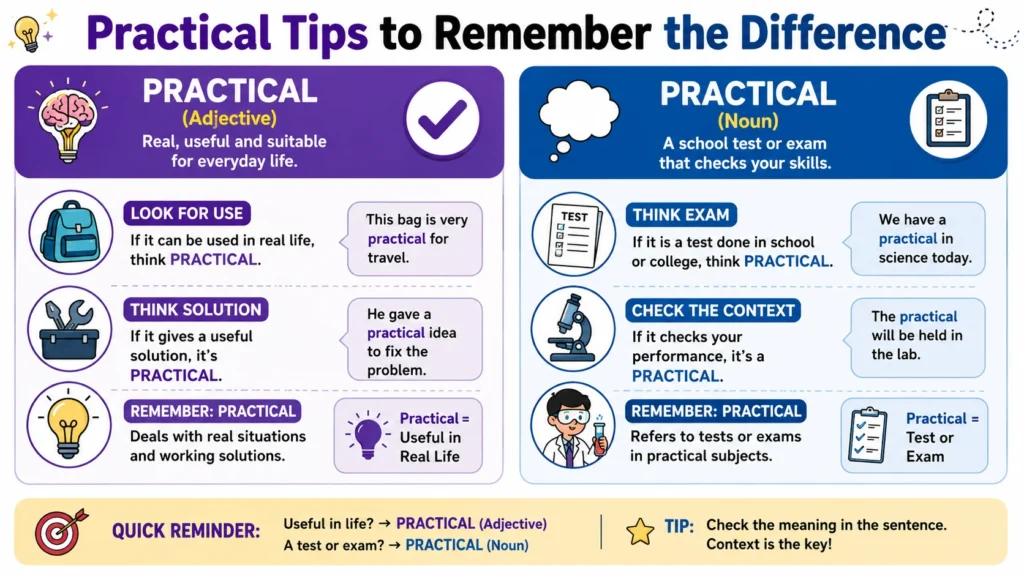
Memory Tricks
- Roll = List: Imagine a scroll or a list being read aloud.
- Role = Function: Think of roles in a play or responsibilities in a team.
Quick Test Method
Ask yourself: “Am I tracking attendance or naming functions?”
- Attendance → Roll call
- Functions/Responsibilities → Role call
Visual Cues
Create a simple mental image:
- Roll → A long paper scroll with names checked off
- Role → A stage with actors performing their parts
Real-Life Usage Scenarios
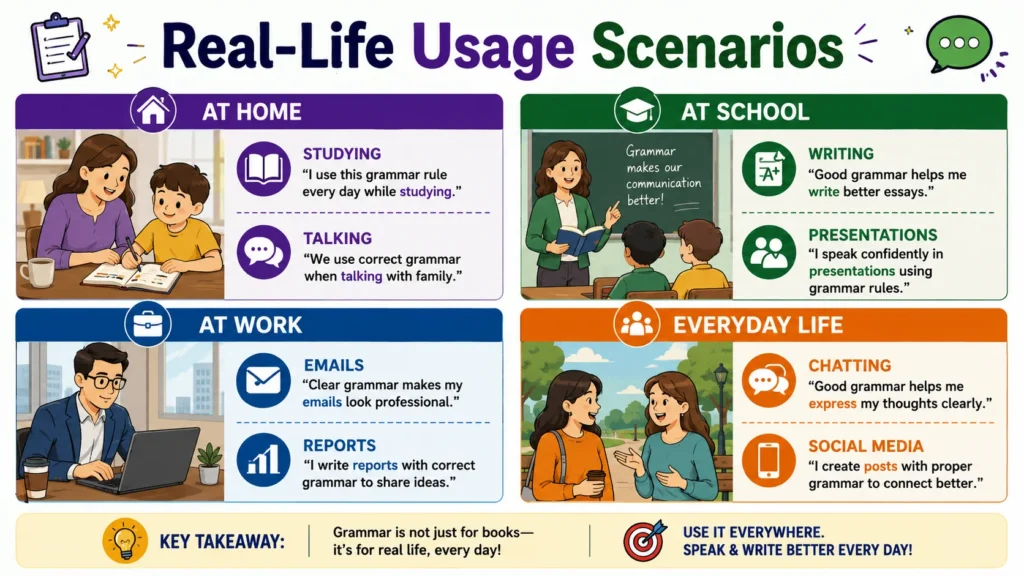
School Attendance
- Teachers use roll calls daily to mark students present, absent, or tardy.
Military Formation
- Soldiers assemble for morning roll calls to ensure everyone is accounted for before duties begin.
Event Registration
- Event organizers check attendees off a list using digital or paper roll call
Legislative Voting
- Parliamentary roll calls document votes in government.
Customer Service Queues
- Receptionists or customer service teams may use roll calls to confirm participants in workshops, webinars, or sessions.
Related Words and Phrases
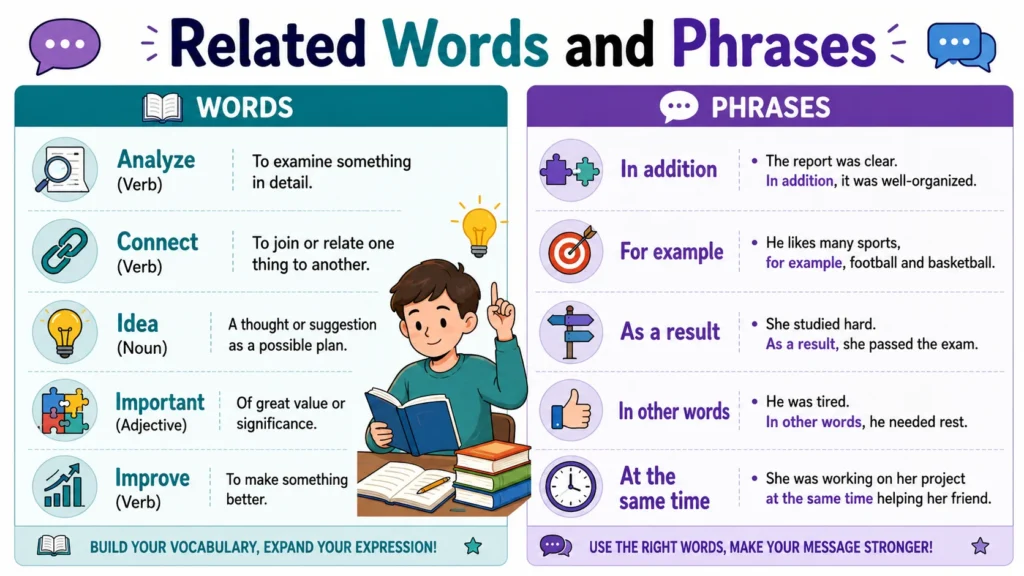
Synonyms for Roll Call:2
- Attendance check
- Muster
- Tally
- Sign-in
Synonyms for Role:
- Function
- Duty
- Responsibility
- Character
Word Origin Connections:
- Understanding that roll refers to a physical or digital list, while role refers to a function or part, helps prevent misuse.
Conclusion
Understanding the difference between Roll Call and Role Call makes your English more accurate and professional. Although the two expressions sound the same, they have different meanings and should be used in different contexts. Roll call is the correct term for checking attendance, while role call is usually a writing mistake unless you are referring to someone’s role or character. Paying attention to spelling, grammar, and usage helps you avoid confusion and communicate with greater clarity. With regular practice and a few simple memory tricks, choosing the correct expression becomes natural.
FAQs
Q1. What is the difference between Roll Call and Role Call?
Roll call is the formal process of checking attendance by calling people’s names. Role call is usually an incorrect substitution, while role refers to a person’s function, part, or character.
Q2. Is Role Call ever correct?
Yes, but only in specific contexts where you are discussing different roles. When talking about attendance or taking attendance, roll call is always the correct expression.
Q3. Why do people confuse Roll Call and Role Call?
People confuse them because they are homophones. They have the same pronunciation but different spellings and meanings, which often leads to common confusion and writing mistakes.
Q4. Where is Roll Call commonly used?
Roll call is commonly used in schools, classrooms, meetings, training sessions, workplaces, and HR settings to verify attendance, mark people present or absent, and maintain accurate attendance records.
Q5. How can I remember the correct term?
Think of roll as a register, list, or attendance sheet containing names. If you are checking who is present, use roll call. If you are talking about a person’s role, function, or character, then use role instead.
