
Mastering Well Deserved or Well-Deserved improves clarity, tone, and meaning, helping you write confidently and avoid common grammar mistakes.In my experience, focusing on clarity, language, and an often overlooked skill can significantly affect communication. The subtle difference between well deserved and well-deserved may seem small, but it is important and essential for conveying the right tone and meaning. When I first started editing, I had to delve into the intricacies of these terms, and the process felt empowering. You start to use them correctly and effectively, gaining more confidence in your writing. With knowledge, you can refine your style, avoid common pitfalls, and improve overall expression, accuracy, and consistency in both formal and informal contexts.
The correct choice really depends on how the phrase is used in a sentence. Use well-deserved with a hyphen when it comes before a noun as a compound adjective, such as a promotion. Use well deserved without a hyphen after a linking verb like was. This small punctuation change makes your writing clearer and follows standard English grammar. Many learners, even native speakers, hesitate because both versions appear in books, news, articles, and online. The difference is not about meaning but about structure. Once you understand how it acts or appears, choosing the right form becomes easy. This guide helps you learn, see real-life examples, discover mistakes, and explore recommendations for everyday, academic, and professional writing.
Many people get confused and write both forms without thinking about place in the sentence. But knowing the way keeps your writing clear, natural, and confident. I’ve seen how a tiny hyphen can make or break a writer’s reputation, especially in corporate emails or reports. That little line can feel like the difference between professional finesse and a glaring error. Students, bloggers, and experienced writers face this daily. The good news is that a single rule often solves the problem. With proper hyphenation and punctuation, you improve, fix, and build strong skills through practice, editing, and proofreading. Over time, you stop second guessing, and your sentences look more polished, follow conventions, and fit different grammatical situations with ease.
Understanding Hyphenation
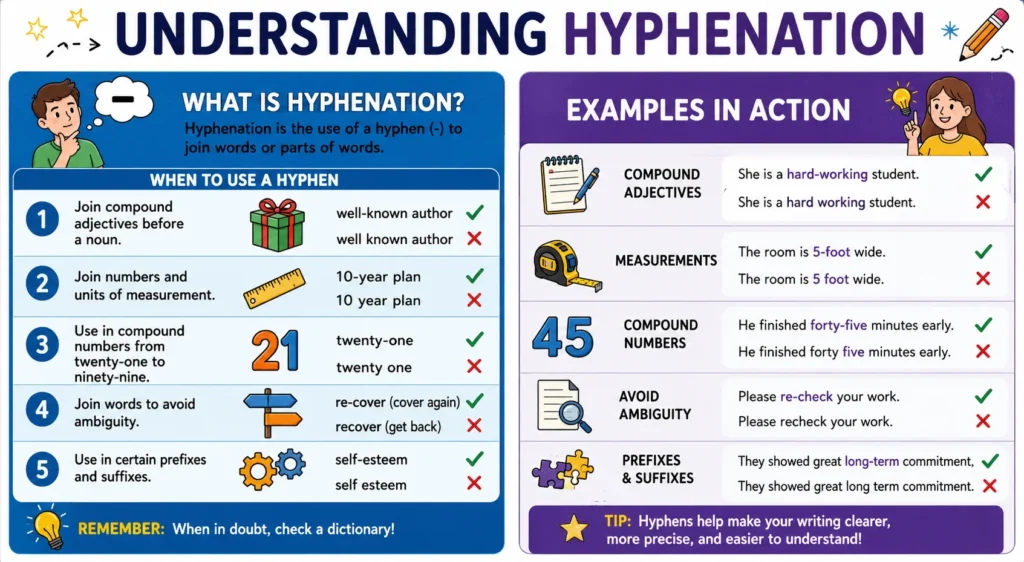
Hyphens are small, but they carry weight. They link words to form compound adjectives or clarify relationships between words. Misplacing a hyphen can confuse readers or even change the sentence’s meaning.
For example:
- Well-deserved promotion (adjective, describes promotion)
- The promotion was well deserved (predicate, no hyphen needed)
Hyphens are often used in compound adjectives such as:
- High-quality products
- Part-time job
- Well-known author
Think of a hyphen as a bridge. It shows that two or more words work together as a single idea. Without it, your sentence might still be correct but less precise or professional.
The Adjective Form: Well-Deserved
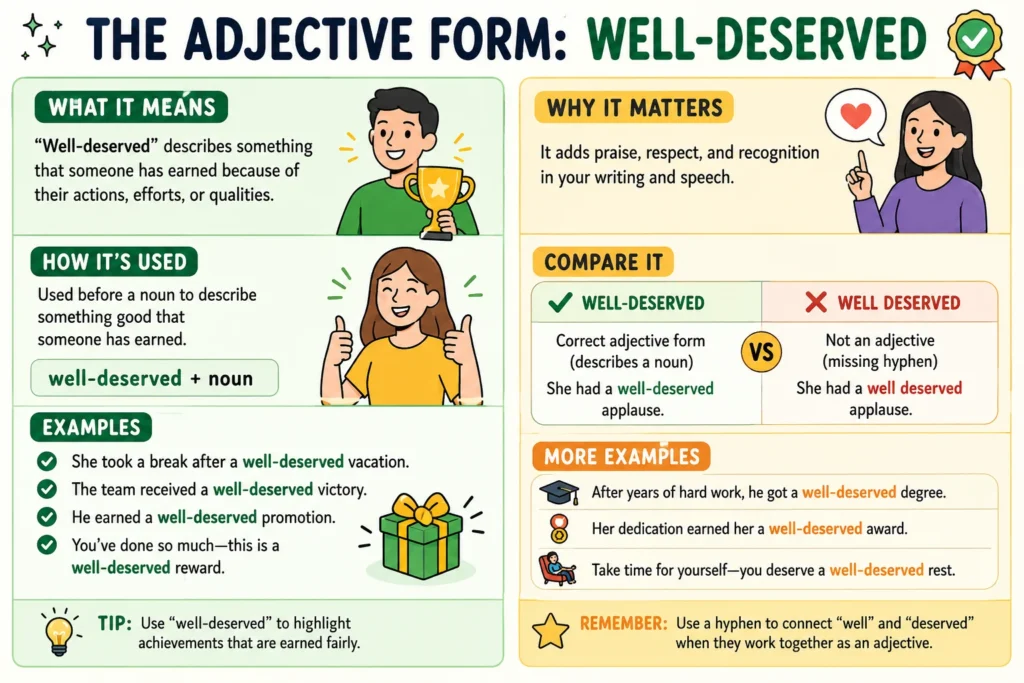
When describing a noun, use well-deserved with a hyphen. This is the compound adjective form.
Examples:
- She received a well-deserved award for her efforts.
- After months of hard work, he finally took a well-deserved vacation.
- Their success was well-deserved and long overdue.
Key Points for Adjective Usage
- Always hyphenate before the noun.
- Never hyphenate after the noun.
- Can combine with other adjectives: “a well-deserved and impressive recognition.”
Quick Reference Table: Adjective vs. Predicate
| Usage Type | Example | Hyphen Needed? |
| Before noun (adjective) | a well-deserved award | Yes |
| After noun (predicate) | The award was well deserved | No |
| In verb phrase | She handled criticism well deserved | No |
This table is a simple guide for avoiding the most common mistakes.
The Noun/Verb Form: Well Deserved
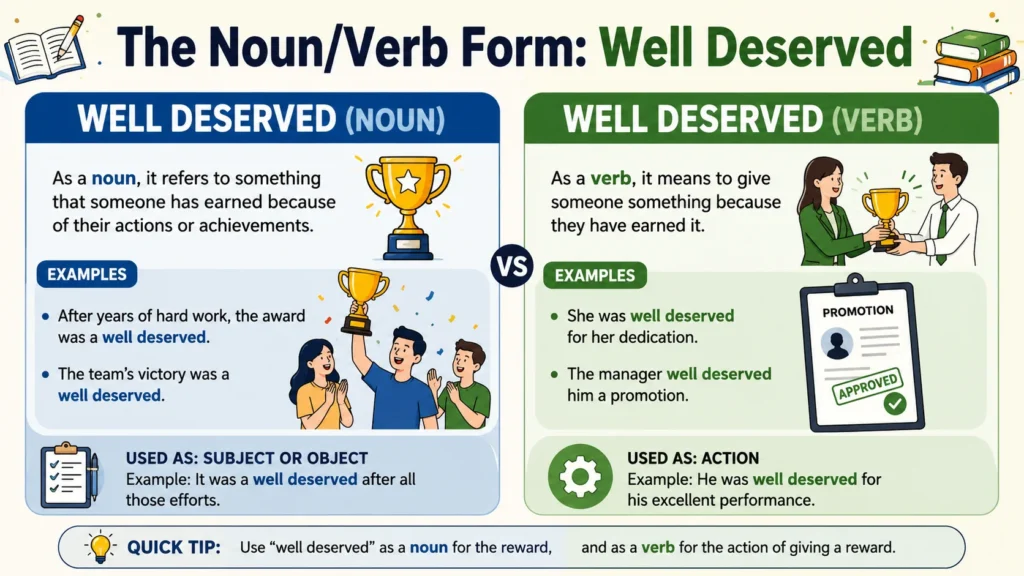
Sometimes, well deserved functions as part of a verb phrase or predicate. Here, you don’t need a hyphen.
Examples:
- The recognition was well deserved.
- That honor is well deserved by the team.
- Praise for his dedication is well deserved.
Notice that the hyphen is unnecessary because the phrase describes the verb or the subject, not a noun directly.
Common Mistakes
- Writing “The award was well-deserved” is often unnecessary; the predicate form works fine without a hyphen.
- Using it as an adjective after the noun is incorrect: “The vacation was well-deserved” → should be “well deserved.”
Grammar Rules You Must Know
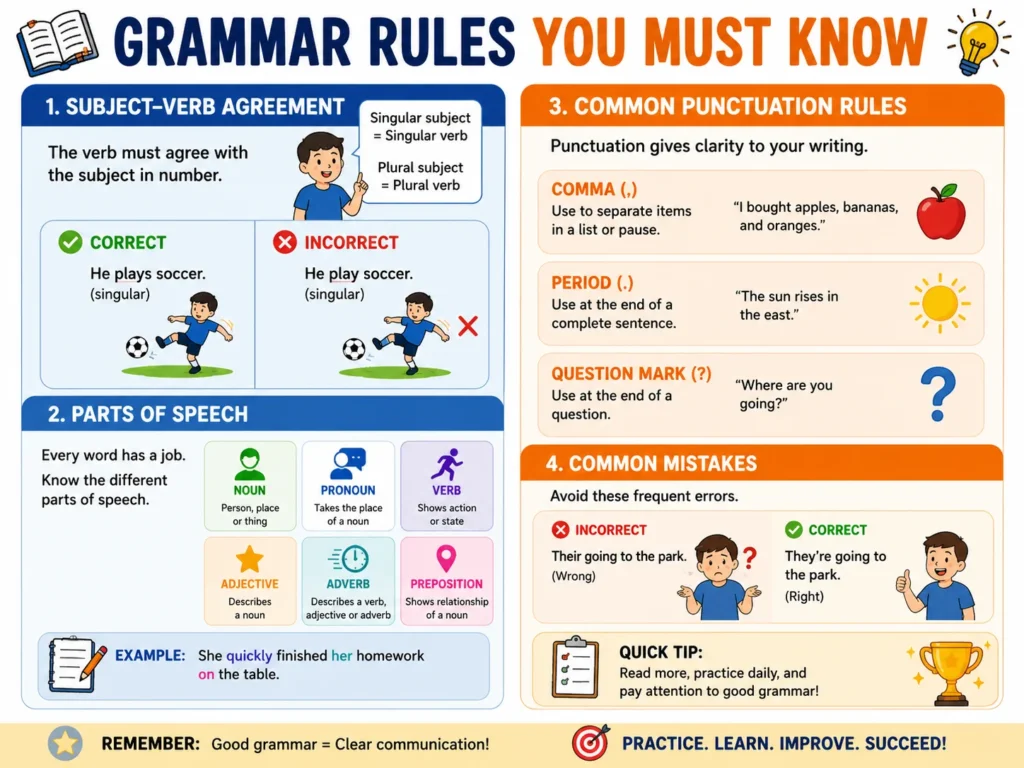
Correct usage boils down to a few rules:
Rule 1: Compound adjectives before nouns
Always hyphenate when the phrase modifies a noun.
Rule 2: Predicate usage
No hyphen when it comes after a linking verb like “is,” “was,” or “seems.”
Rule 3: Adverb + past participle
“Well” is an adverb, “deserved” is a past participle. Adverbs rarely need hyphens, but combined with a participle to describe a noun, you do hyphenate.
Rule 4: Avoid double hyphenation
Don’t write “well-deserved-award.” Rarely necessary and awkward.
Quick Reference Table: Usage Context
| Context | Correct Form | Example |
| Adjective (before noun) | well-deserved | a well-deserved award |
| Predicate (after verb) | well deserved | The award was well deserved |
| Adverbial phrase | well deserved | She handled criticism well deserved |
Consistency in UK vs. US English
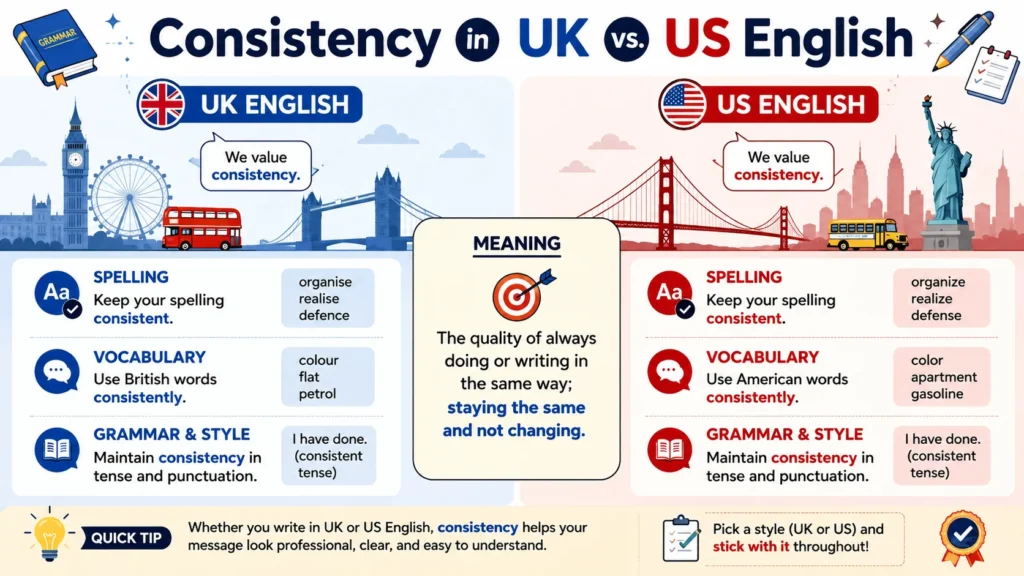
English isn’t uniform across regions. Hyphen usage varies slightly between British and American English, but well-deserved is mostly consistent.
- UK English: “well-deserved” is standard in both adjective and some predicate forms.
- US English: “well-deserved” is standard before nouns, but the predicate form usually drops the hyphen.
Consistency matters. Pick one style and stick with it, especially in professional writing.
Common Mistakes to Avoid
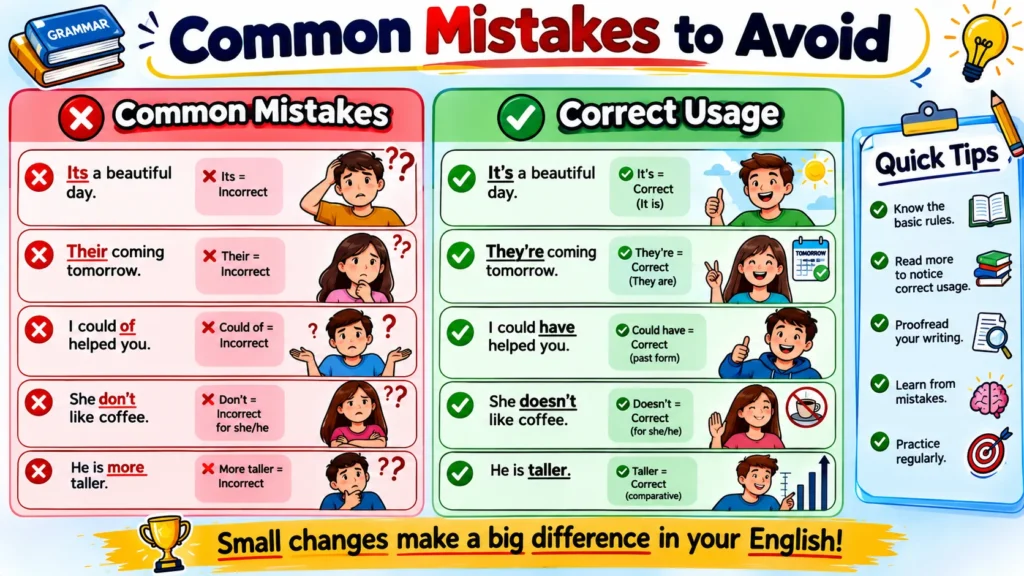
Even experienced writers make errors. Watch out for:
- Using a hyphen in predicate form: “The recognition was well-deserved” → better: “well deserved.”
- Mixing styles mid-article: Don’t switch between UK and US rules arbitrarily.
- Confusing similar phrases: “Well-earned” implies effort led to reward, while “well-deserved” suggests the reward is appropriate.
Incorrect vs. Correct Table
| Incorrect | Correct | Reason |
| The prize was well-deserved | The prize was well deserved | Predicate form doesn’t need hyphen |
| He earned a well deserved award | He earned a well-deserved award | Adjective before noun needs hyphen |
| A much deserved honor | A much-deserved honor | Compound adjective rule |
Tips for Mastering Usage
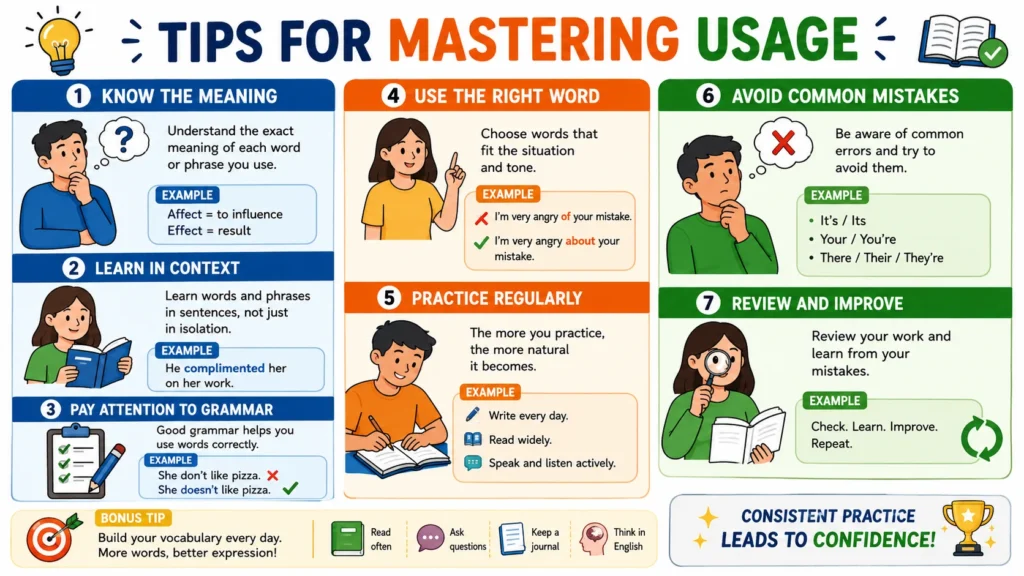
Here’s how to get it right every time:
- Check placement in the sentence: Before noun → hyphen. After verb → no hyphen.
- Read aloud: Does it sound natural? If it describes a noun, hyphenate.
- Use a style guide: Follow Chicago, AP, or Oxford rules for tricky cases.
- Create a cheat sheet: Keep a table at your desk for quick reference.
- Practice with examples:
- Before noun: “a well-deserved break”
- After verb: “The break was well deserved”
- Compare similar compounds: “Well-known,” “high-quality,” and “long-term” follow the same rules.
Conclusion
Understanding the difference between well deserved and well-deserved may seem minor, but it plays a key role in clear and professional writing. The simple rule—use the hyphenated form before a noun and the open form after a verb—helps you avoid confusion and maintain accuracy. As you practice, this choice becomes natural, improving your grammar, tone, and overall communication. Paying attention to small details like hyphenation shows care in your writing and builds confidence in every sentence you create.
FAQs
Q1. What is the difference between “well deserved” and “well-deserved”?
“Well-deserved” is used before a noun as a compound adjective, while “well deserved” is used after a verb without a hyphen.
Q2. Is “well-deserved” always hyphenated?
No, it is only hyphenated when it comes before a noun. Otherwise, it should be written as two separate words.
Q3. Which form is more correct in English?
Both forms are correct. The choice depends on sentence structure, not meaning.
Q4. Why do people get confused between these forms?
Because both versions appear in books, articles, and everyday writing, making it harder to notice correct usage.
Q5. How can I remember the correct usage easily?
Use “well-deserved” before a noun and “well deserved” after a verb—this simple rule works every time.
