
The Catalog vs Catalogue choice depends on context, audience, and regional usage, shaping clarity, perception, and professional communication.From my experience, writers, students, and professionals often struggle with this spelling difference. In American English, people prefer catalog, while British English favors catalogue, especially in academic, business, and online contexts like shopping websites. This small variation may seem minor, but it strongly affects reader comprehension, particularly for language learners and even native speakers dealing with confusion in words, spellings, and language variation. Choosing the correct form ensures your message feels clear, consistent, and appropriate for your audience.
When you start creating a list of books, products, or services, or organizing a collection of items, you’re essentially cataloguing—a structured method that requires attention to syntax, grammar, and orthography. This includes understanding the historical origin of letter sequence patterns (even unusual ones like ewe) and following standard rules from a reliable dictionary or lexicon. Strong writing also depends on choosing the right terms, maintaining consistency, and applying comparison where needed. I’ve found that using illustrative and practical examples, along with reference points like entries and definitions, helps readers discover how each version works in real-world usage context, whether in articles, academic work, or daily communication.
On a deeper level, this topic goes beyond correct spellings into meaning, semantic nuance, and how language rules support smooth and natural writing. Factors like regional English usage, writing choice, and usage rules influence how your text feels to different audiences. Simple words like both, each, because, when, and about shape the flow, while contractions such as you’ve, you’re, isn’t, and it creates a more conversational tone. By paying attention to lexical choice, avoiding mistakes, and using a clear guide, you can confidently write, use, and choose the right form, building stronger writing skills and improving your journey in learning English.
Origins and History of Catalog/Catalogue
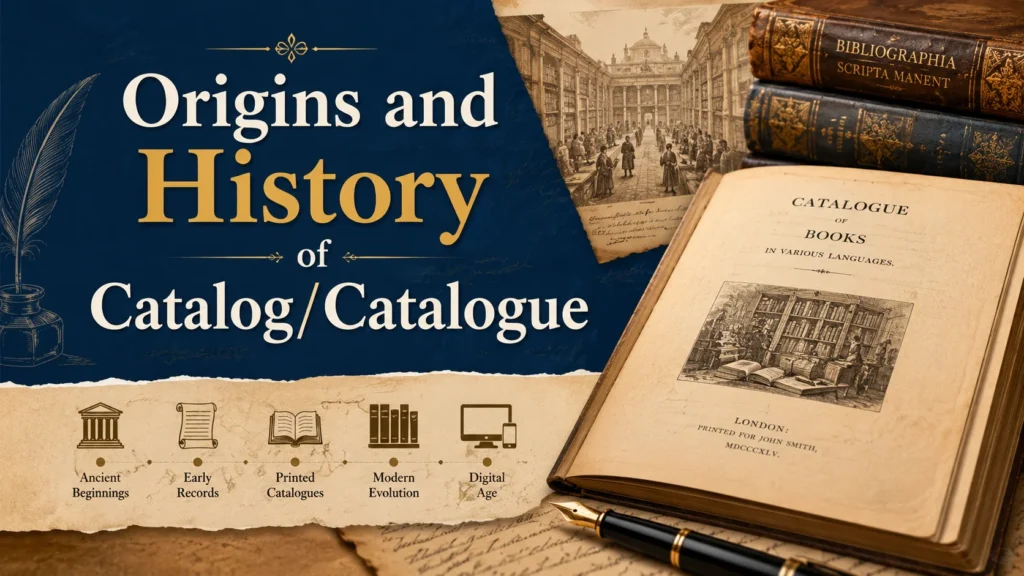
The word catalogue comes from the Greek term katálogos, meaning “a list” or “register.” It first entered the English language in the late 16th century, primarily in the context of printed books and official lists. Early English publications consistently used the longer British spelling “catalogue”, reflecting its Greek roots and formal tone.
American English, however, began simplifying spellings in the 19th century. Influential writers like Noah Webster promoted shorter, more phonetic forms, leading to the widespread adoption of “catalog” in the United States.
Key historical points:
- 16th century: “Catalogue” enters English from Greek.
- 19th century: Noah Webster’s reforms push American English toward simplified spelling.
- Early 20th century: “Catalog” becomes the standard in the U.S., while the U.K. retains “catalogue.”
Quote: “Language evolves to meet the needs of its users, balancing tradition with efficiency.” – Linguistics scholar
American vs British English
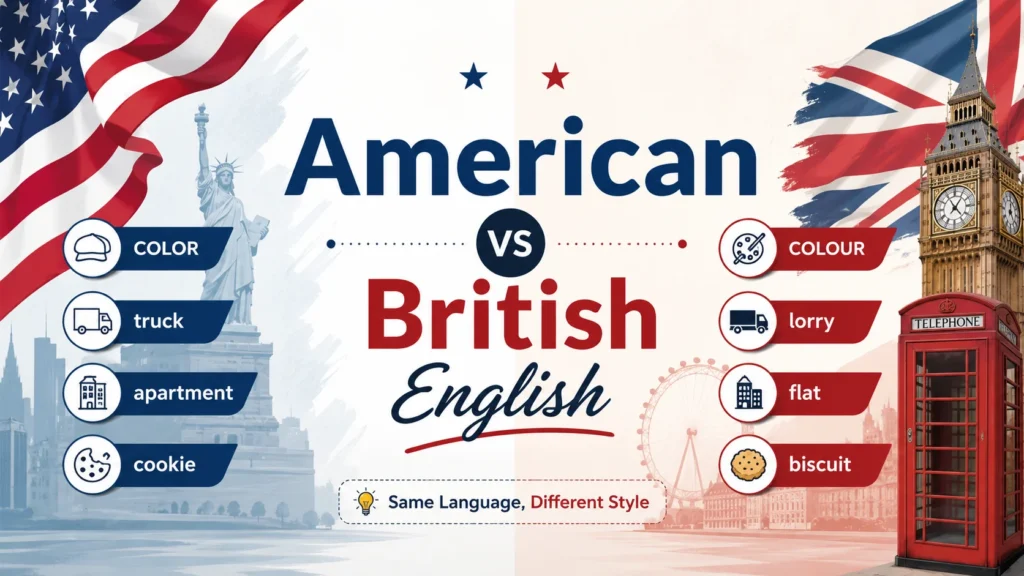
The choice between catalog and catalogue largely depends on geography.
American English:
- “Catalog” is overwhelmingly dominant.
- Preferred in business, education, and digital content.
- Seen as modern and concise.
British English and Commonwealth countries:
- “Catalogue” remains the formal and accepted spelling.
- Common in literature, newspapers, and academic writing.
- Perceived as more traditional and polished.
Example Table: Usage Frequency
| Country/Region | Preferred Spelling | Notes |
| United States | Catalog | Standard in business and academia |
| United Kingdom | Catalogue | Traditional and formal |
| Canada | Catalogue/Catalog | Both accepted; British influence prevails |
| Australia | Catalogue | Standard in formal writing |
| New Zealand | Catalogue | Follows British conventions |
Even in global businesses, the choice of spelling can signal attention to audience expectations. For instance, Amazon.com uses “catalog”, while the British counterpart Amazon.co.uk sticks to “catalogue.”
Style Guides and Professional Usage

Professional writing often follows style guides. Here’s how catalog and catalogue are treated:
Major Style Guides:
- AP Style (American): Catalog
- Chicago Manual of Style: Catalog (preferred in US contexts)
- Oxford Style Guide: Catalogue (British standard)
- MLA (Modern Language Association): Catalogue in academic contexts for British English; Catalog for US publications
Academic Writing:
- British universities prefer catalogue, even in digital libraries.
- American universities adopt catalog, especially in course catalogs and library systems.
Corporate Usage:
- Business reports, product listings, and websites in the US default to catalog.
- Companies with international audiences sometimes maintain dual versions to match local conventions.
Example Table: Style Guide Recommendations
| Style Guide | Spelling Recommendation | Region Focus |
| AP Style | Catalog | US |
| Chicago Manual | Catalog | US |
| Oxford Style Guide | Catalogue | UK |
| MLA | Catalogue/Catalog | Academic |
Real-World Usage

The spelling difference is more than academic—it appears everywhere from literature to digital platforms.
Literature Examples:
- British classic: “The catalogue of rare books was impressive.”
- American novel: “She browsed the store’s latest catalog.”
Digital & E-commerce:
- Online stores in the US: “View our Spring Catalog”
- UK-based stores: “Check out our Winter Catalogue”
Library Science & Education:
- Cataloging standards in the US (Library of Congress): “Catalog”
- British Library: “Catalogue”
Pro Tip: Look at your audience and platform. Use catalog for American readers and digital content targeting US users, and catalogue for formal UK documents or traditional publications.
Rules and Tips for Remembering the Difference
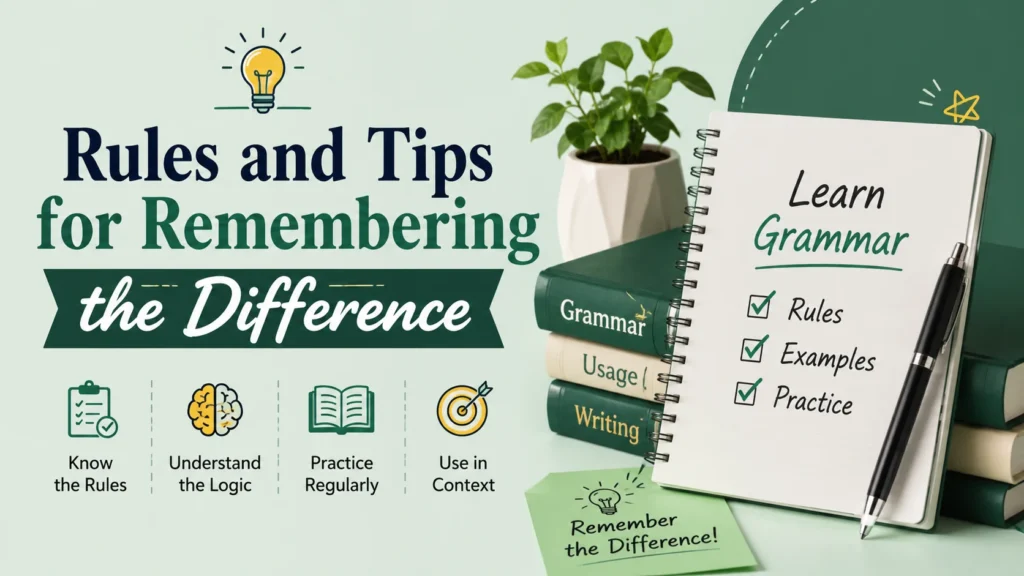
Here are some practical tips to avoid confusion:
- Geography Rule: If your readers are primarily American, use catalog. For British or Commonwealth readers, use catalogue.
- Style Guide Rule: Follow your organization or academic style guide.
- Context Rule: Digital content and product listings usually favor catalog; formal writing often favors catalogue.
- Memory Tip: The “ue” in catalogue reminds you of the UK.
Common Mistakes:
- Mixing both spellings in one document.
- Using catalog in British newspapers or formal literature.
- Forgetting audience expectations in global communications.
Related Confused Words
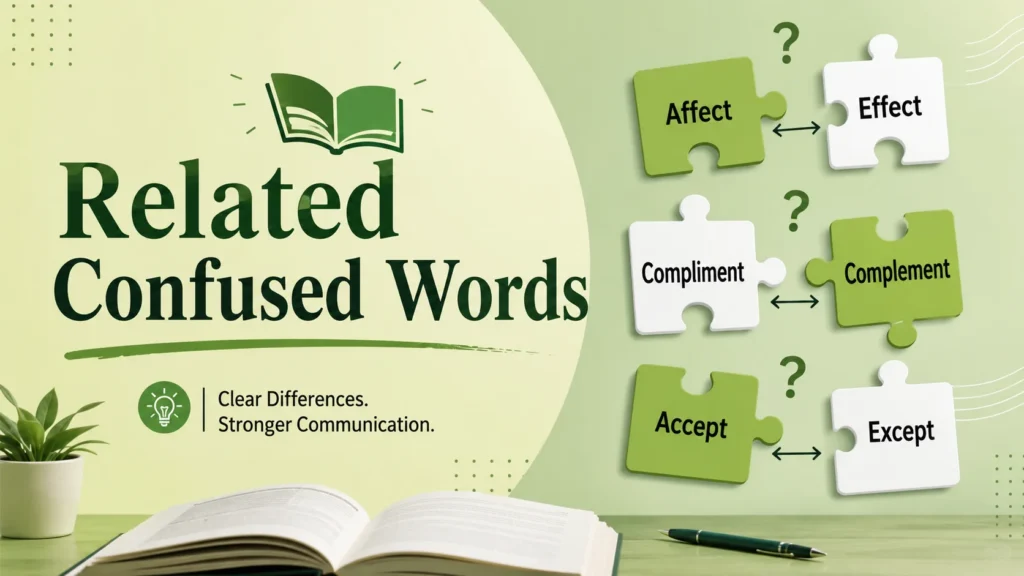
While catalog vs catalogue is the main focus, English has many similar spelling dilemmas. Here are a few:
- Everyday vs Every day – “Everyday” is an adjective, “every day” is a time expression.
- Waive vs Wave – “Waive” means to give up, “wave” refers to a hand gesture or motion.
- Expedite vs Extradite – “Expedite” speeds up a process, “extradite” transfers someone legally.
- Tunable vs Tuneable – Both correct, but “tunable” is standard in American English.
- Extensible vs Extendible – “Extensible” is preferred in tech and software contexts.
Keeping these distinctions clear prevents errors and boosts professionalism.
Conclusion
Choosing between catalog and catalogue isn’t about right or wrong—it’s about context, audience, and regional usage. Both forms are correct, but using the one that matches your readers’ expectations improves clarity, consistency, and professional communication. From my experience, paying attention to small spelling details like this builds stronger writing skills and helps your content feel more natural. Whether you’re writing for American English or British English, the key is to stay consistent and make intentional choices that support your message.
FAQs
Q1. Is “catalog” or “catalogue” correct?
Both are correct. Catalog is used in American English, while catalogue is preferred in British English.
Q2. Which form should I use in professional writing?
Use the form that matches your audience and region. Consistency is more important than the choice itself.
Q3. What does “cataloguing” mean?
Cataloguing refers to the process of creating and organizing a list or collection of items, such as books or products.
Q4. Is there a difference in meaning between the two words?
No, both words have the same meaning. The difference is only in spelling and regional usage.
Q5. How can I avoid confusion between catalog and catalogue?
Follow a style guide, know your target audience, and stay consistent throughout your writing.
