
Successfully or Succesfully mastering spelling helps you accomplish remarkable writing in emails, essays and reports with clarity focus skills. If you want to accomplish something remarkable, you must start by mastering the tricky, even trickiest, word that often trips seasoned writers and new learners. From my experience, I have seen this challenge in articles, essays, reports, emails, and other forms of professional writing. A clear guide helps unravel the mystery of successfully vs succesfully, ensuring correct spelling and avoiding incorrect forms while improving English writing, professional communication, and overall clarity, precision, accuracy, confidence, focus, and credibility.
In real writing, spelling, spellings, spelling errors, spelling error, spelling mistake, mistake, mistakes, error, errors, misspelling, and typo often appear during fast typing or when typed quickly. Understanding proper spelling, proper form, and correct form depends on grammar, punctuation, context, vocabulary, and usage rules. Knowing proper usage and correct usage helps avoid common errors, common mistake, and commonly confused words while improving writing skills. Whether you are drafting content, a sentence, an article, an essay, a report, or an email, proofreading, proofread, and editing strengthen the final output.
As you continue learning and improving, you begin to avoid repeated mistakes and achieve the desired result more consistently. Every writer can keep improving, and every piece of written text becomes more accurate when aiming for accomplishing clear communication. Small habits create a big impact, whether on projects, a single project, or daily writing skills. The right spelling shapes how readers perceive your work and forms their perception, ensuring every hit truly hits the mark, especially in professional and critical English writing.
The Quick Answer
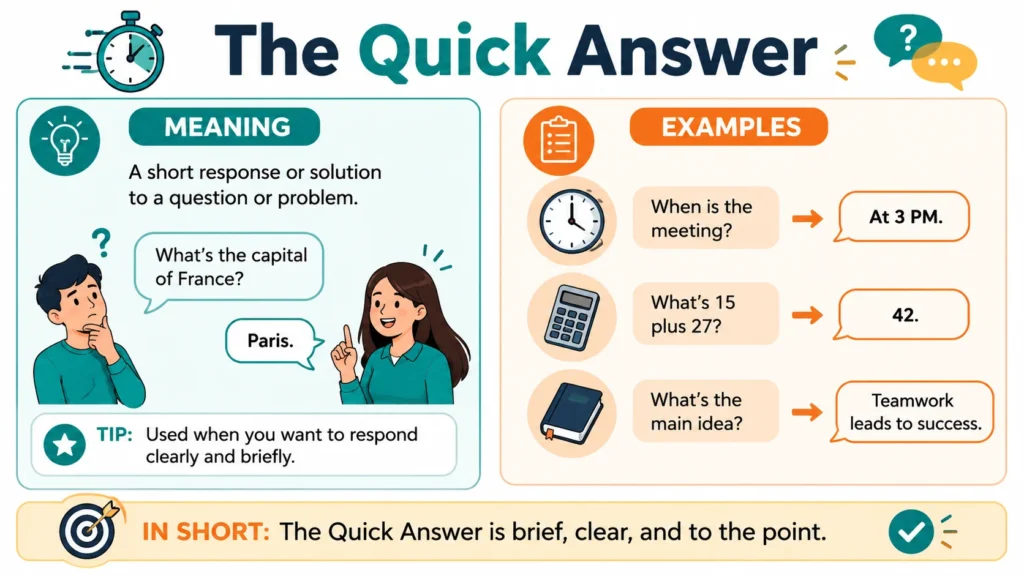
If you’ve ever wondered, the simple truth is this: “Successfully” is correct, and “successfully” is wrong.
The reason seems obvious once you break the word down. It stems from the word “success”, combined with the suffixes “-ful” and “-ly.” Dropping the second “s” breaks the logical construction of the word and creates a spelling error.
The Origin and Structure of “Successfully”
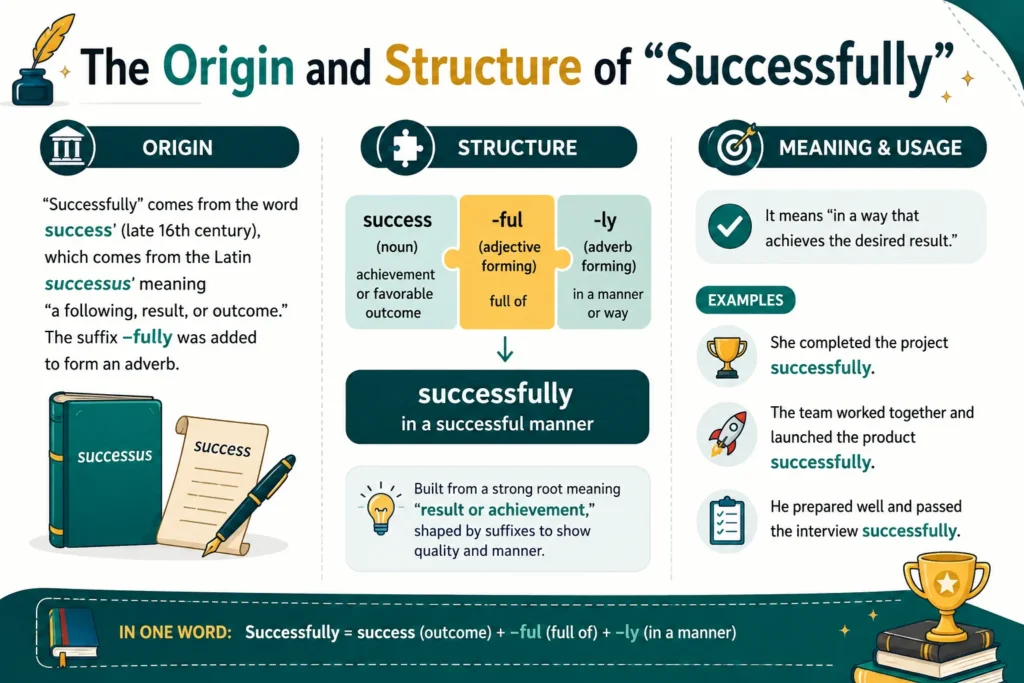
Etymology Snapshot
The word “successfully” comes from the noun “success,” which has its roots in the Latin successus, meaning “an advance, outcome, or good result.” Over time, English adopted success in the late Middle Ages. Adding “-ful” turns the noun into an adjective, meaning “full of success.” Finally, “-ly” transforms it into an adverb, describing how an action is performed.
So, success → successful → successfully is the logical progression.
Why Two S’s Matter
The two S’s in the middle are not random; they maintain the root word “success.” Dropping one S results in “successfully,” which disconnects the word from its origin.
Here’s a clear breakdown:
| Part | Meaning | Example |
| suc- | root of success | succeed, success |
| -cess- | continuation of root | process, access |
| -ful | full of | successful |
| -ly | adverbial suffix | successfully |
Remembering this breakdown helps avoid mistakes and ensures you spell the word correctly every time.
Meaning in Context
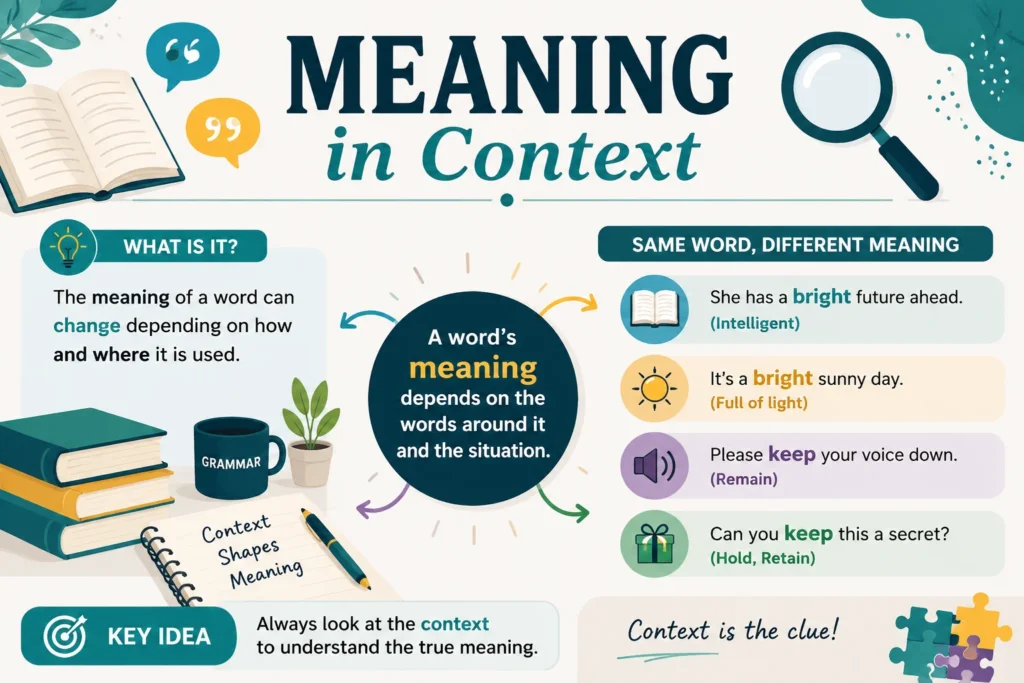
“Successfully” describes the way an action achieves a desired result. It’s versatile and appears in many contexts: business, academic writing, everyday communication.
Here are examples:
- Business: She successfully led the team to complete the project ahead of schedule.
- Education: He successfully defended his thesis in front of a panel of professors.
- Personal: I successfully solved the puzzle after hours of thinking.
Using the word correctly signals competence and clarity in your writing.
Common Reasons People Spell It Wrong
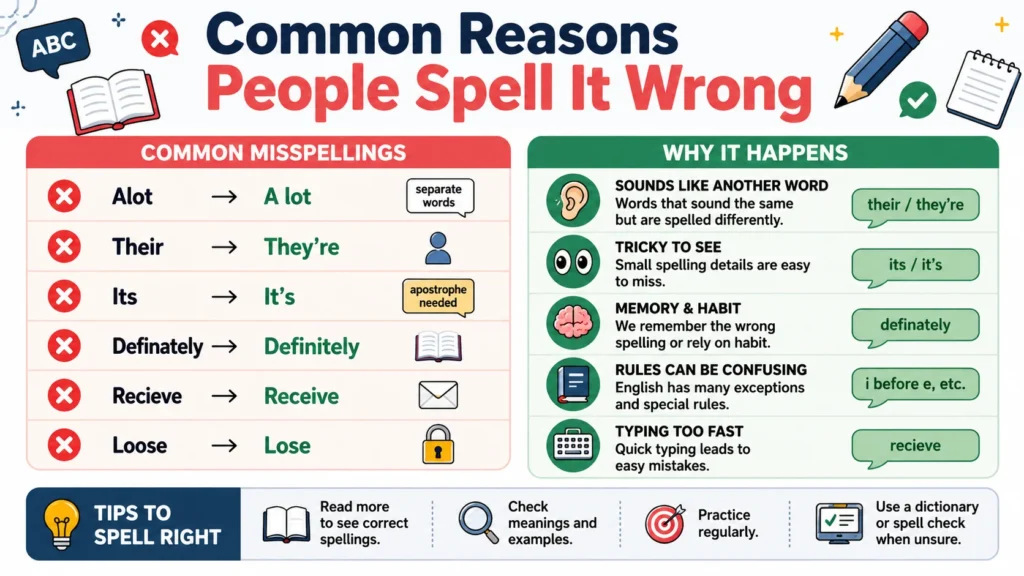
Even experienced writers often type “succesfully”. Understanding why helps you avoid repeating the error.
- Psychological Patterns: Dropping the second S feels faster and simpler, but it’s incorrect.
- Spellcheck Limits: Some spellcheck tools don’t flag errors if the misspelled word is close to a valid alternative.
- Keyboard Influence: Rapid typing or muscle memory can lead to skipping letters.
Identifying these triggers allows you to develop habits that prevent mistakes.
How to Always Spell “Successfully” Correctly
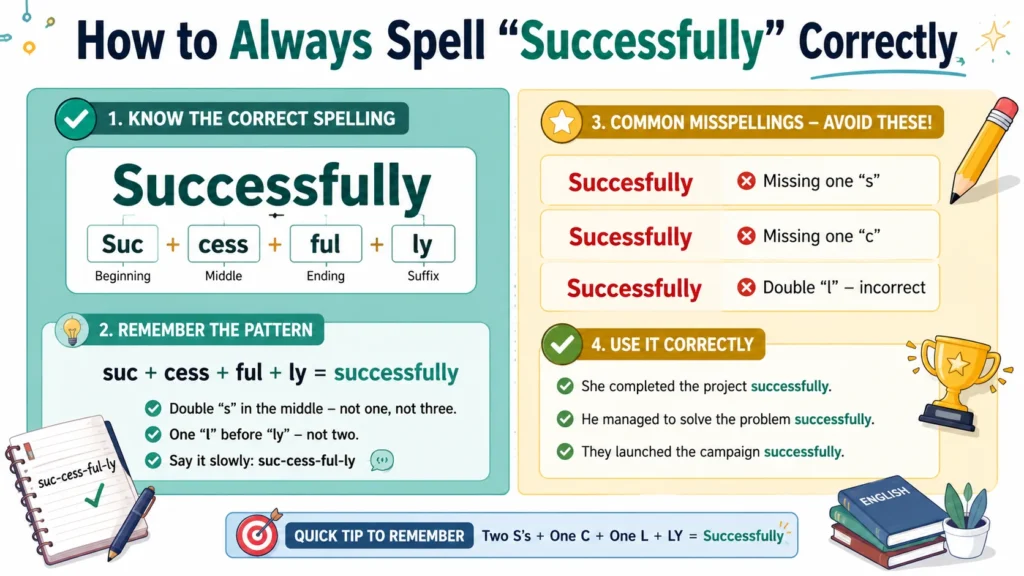
Memory Tricks
- Chunking Method: Break the word into parts: suc-ces-ful-ly. Pronounce each part slowly when typing.
- Mnemonic: “Success comes from two S’s, then full effort, then ly.”
Error-Proofing Techniques
- Proofreading Patterns: Read your writing backward, word by word, to spot spelling errors.
- Keyboard Habits: Train your fingers to hit each letter deliberately when typing frequently misspelled words.
- Digital Tools: Grammarly, Microsoft Editor, and other tools can catch errors your brain misses.
By combining memory techniques with proofreading, you’ll drastically reduce errors.
Real-World Impact of Correct Spelling
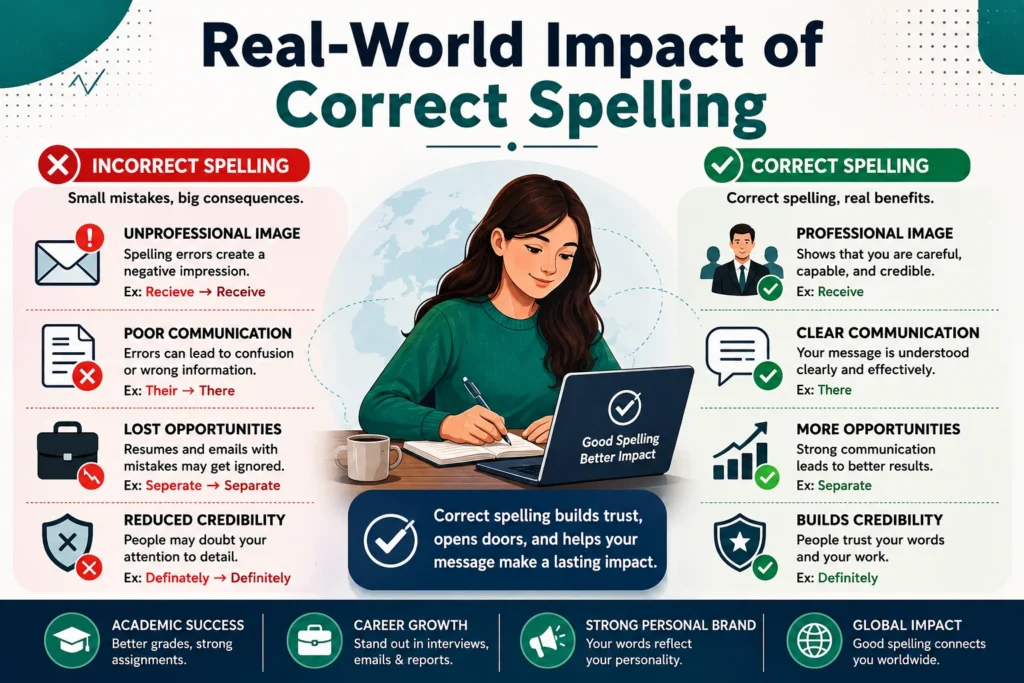
Correct spelling goes beyond grammar—it affects how others perceive you.
Professional Credibility
In professional settings, consistent errors can harm your reputation:
- Emails: A single typo can make your communication look careless.
- Reports: Clients and colleagues may doubt your attention to detail.
- Resumes: Spelling mistakes can reduce your chances of landing interviews.
Case Study: Business Impression Shift
A marketing firm conducted an internal review comparing emails with frequent spelling errors versus those with correct spelling.
- Incorrect emails: 68% of recipients rated them as less professional.
- Correct emails: 92% rated them as credible and trustworthy.
Small errors like writing successfully instead of successfully can subtly erode trust.
Common Mistakes Related to “Successfully”
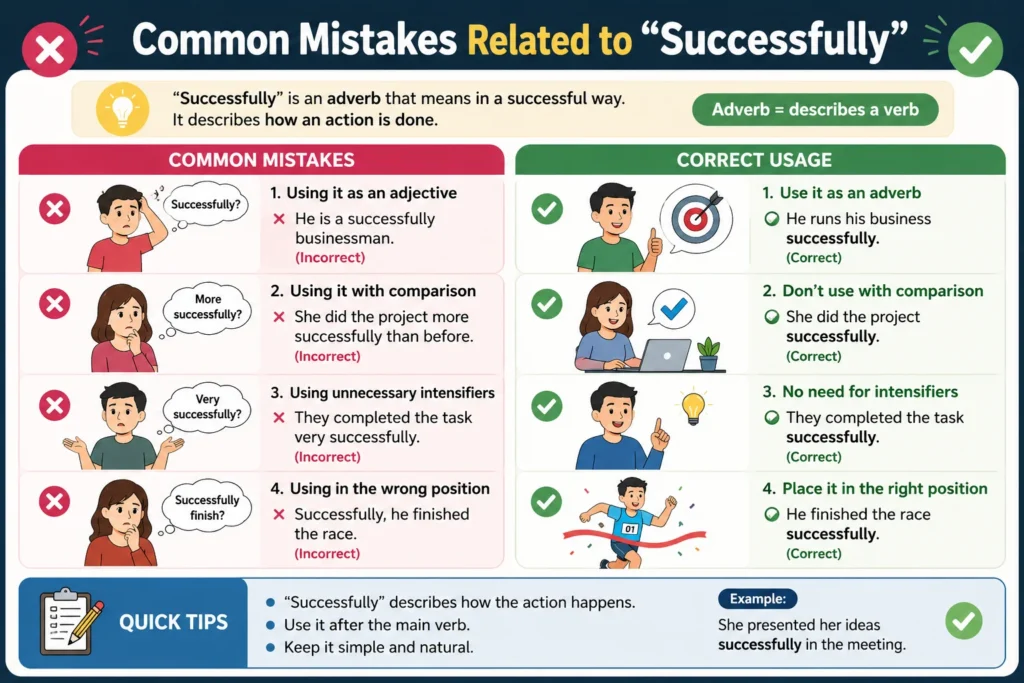
Writers often confuse successfully with these variants:
- Successfully
- Successfully
- Successfully
- Successfully
Quick Reference Table
| Common Mistake | Correct Form | Tip to Remember |
| Successfully | Successfully | Remember root “success” |
| Successfully | Successfully | Double “s” in the middle |
| Successfully | Successfully | Chunk as suc-ces-ful-ly |
| Successfully | Successfully | Don’t drop “l” before “y” |
Beyond Basic Usage

Effective Synonyms
Sometimes, you might want alternatives for variety:
- Effectively: Focus on the result, less formal.
- Efficiently: Emphasizes speed or resource use.
- Competently: Highlights skill or ability.
- Skillfully: Suggests mastery in performing tasks.
Example:
- Instead of: She successfully completed the project.
- You could write: She efficiently completed the project.
Using “Successfully” More Elegantly
Avoid redundancy. Instead of saying:
- She successfully managed to finish the project successfully.
Try:
- She successfully completed the project.
Clean phrasing improves readability and professionalism.
Expert Insights
John McWhorter, linguist and author, notes:
“Small spelling details reflect mental discipline. They may seem minor, but they shape how your language is received in professional and academic contexts.”
Even linguists agree: precision matters.
Quick Reference Tools
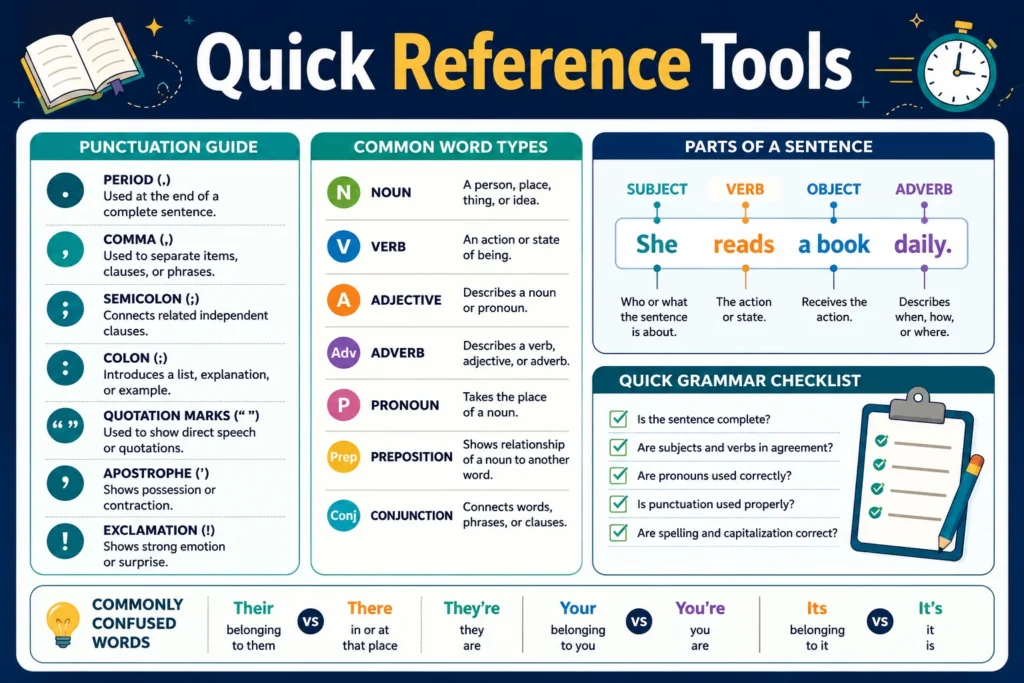
Proofreading Checklist
- Break the word into suc-ces-ful-ly when unsure.
- Use spellcheck but don’t rely solely on it.
- Read backward to spot errors.
- Practice typing the word slowly three times daily until it sticks.
Mini Table for Fast Checks
| Step | Action |
| Step 1 | Identify root: success |
| Step 2 | Add -ful to make adjective |
| Step 3 | Add -ly to make adverb |
| Step 4 | Confirm two S’s intact |
| Step 5 | Proofread before sending |
Conclusion
Mastering Successfully or Succesfully is not just about spelling, it is about building stronger English writing, better professional communication, and higher clarity in every piece of writing. When you focus on proper usage, correct usage, and consistent proofreading, you reduce common mistakes, spelling errors, and confusion that often appear in fast typing or drafting. Over time, this attention improves your confidence, credibility, and overall accuracy, helping your writing skills grow in a more consistent and professional way.Small improvements in spelling, grammar, and context create a big impact on how readers perceive your work. Whether you are writing emails, articles, essays, or reports, the correct spelling helps your message stay clear, precise, and focused. This habit of careful learning and improving ensures your work always hits the mark and reflects a strong level of understanding and detail.
FAQs
Q1. What is correct: Successfully or Succesfully?
The correct spelling is successfully, while succesfully is a common spelling mistake.
Q2. Why do people write it incorrectly?
It usually happens due to fast typing, poor attention to detail, or lack of grammar and usage rules knowledge.
Q3. How can I avoid spelling mistakes like this?
Regular proofreading, editing, and improving writing skills help reduce errors and confusion.
Q4. Where is “successfully” commonly used?
It is used in emails, articles, essays, reports, and all types of professional writing.
Q5. Does spelling really affect professional writing?
Yes, correct spelling improves clarity, credibility, and how readers perceive your communication.
